Acrostic Poem Template: A Complete Guide
Acrostic poems are a fun and creative way to combine word play with storytelling. Whether you’re a teacher looking for a classroom activity, a parent wanting to spark your child’s imagination, or a writer exploring a new poetic form, an acrostic poem template can streamline the process and make the experience enjoyable for all ages.
What Is an Acrostic Poem?
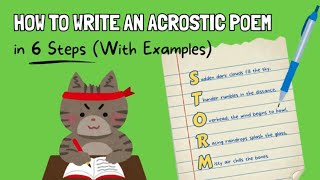
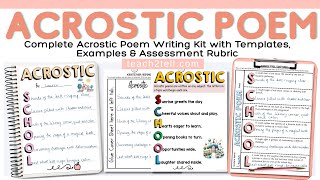
An acrostic poem uses the letters of a chosen word or phrase—often a name, holiday, or theme—spelled vertically. Each line of the poem starts with one of those letters, and the lines together form a meaningful narrative or description. The result is a poem that is both visually engaging and easy to remember.
Why Use a Template?
Templates provide a clear structure that guides writers, especially beginners. They:
- Encourage consistency: Each line follows a predictable pattern.
- Reduce writer’s block: A framework suggests where to begin.
- Facilitate learning: Teachers can demonstrate the form step-by-step.
- Promote creativity: With the basics handled, writers can focus on language and imagery.
Acrostic Poem Template Overview
Below is a simple, versatile template that works for any word or phrase. It can be adapted for different lengths and complexity levels.
- Choose a word or phrase (e.g., EASTER).
- Write the word vertically on a sheet of paper or in a document.
- For each letter, create a line of poetry that begins with that letter.
- Ensure each line is thematically connected to the overall subject.
- Read the poem aloud to check rhythm and flow.
- Revise for clarity, imagery, and rhyme (if desired).
Step‑by‑Step Guide to Create an Easter Acrostic
Below is a detailed process that children and adults can follow to craft a memorable Easter acrostic. This guide can be used in a classroom setting or at home.
Step 1: Select the Keyword
For this example, we’ll use EASTER. The letters are: E, A, S, T, E, R.
Step 2: Brainstorm Themes
Think about what Easter represents: rebirth, spring, chocolate, family, and hope. Make a quick list of related words or images.
Step 3: Draft Each Line
Write a line that starts with the corresponding letter. Keep each line concise but vivid.
- Eager children hunt eggs in bright baskets.
- Always the scent