Understanding Addition and Subtraction with Unlike Denominators
Working with fractions that have different denominators is a fundamental skill in elementary mathematics. Whether you are adding or subtracting, the process requires a clear set of steps to ensure the result is accurate and simplified. This article explains the concepts, outlines step‑by‑step procedures, and highlights useful teaching resources for 4th and 5th grade classrooms.
Why Denominators Must Match
Fractions represent parts of a whole. The denominator tells us how many equal parts the whole is divided into, while the numerator tells us how many of those parts are being considered. When denominators differ, the parts are not the same size, making direct addition or subtraction impossible. Converting the fractions to a common denominator creates equal-sized parts, allowing the numerators to be combined safely.
Step‑by‑Step Guide for Adding Unlike Denominators
- Identify the denominators. Write down the two denominators you are working with.
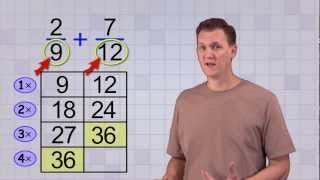
- Find the least common denominator (LCD). List the multiples of each denominator or use prime factorization to determine the smallest number both denominators divide into evenly.
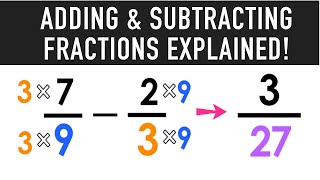
- Convert each fraction. Multiply the numerator and denominator of each fraction by the factor needed to reach the LCD.
- Add the numerators. Once the denominators are identical, add the transformed numerators while keeping the LCD as the new denominator.
- Simplify the result. Reduce the fraction by dividing the numerator and denominator by their greatest common divisor (GCD).
For example, to add 3/4 and 2/5, the LCD is 20. Convert to 15/20 and 8/20, add to get 23/20, and simplify to the mixed number 1 1/20.
Step‑by‑Step Guide for Subtracting Unlike Denominators
- Identify the denominators. As with addition, start by noting each denominator.
- Find the LCD. Use the same method to locate the smallest common multiple.
- Rewrite the fractions. Adjust each fraction so that both share the LCD.
- Subtract the numerators. Keep the LCD unchanged and subtract the second numerator from the first.
- Reduce the fraction. Simplify the resulting fraction by dividing by the GCD.
Consider 7/9 minus 2/6. The LCD is 18. Convert to 14/18 and 6/18, subtract to obtain 8/18