Electromagnetic Spectrum Worksheet: A Complete Guide
Have you ever wondered about the invisible energy that surrounds us? Light, radio waves, X‑rays, and more form a continuous range known as the electromagnetic spectrum. A well‑structured worksheet can help students grasp the relationships between frequency, wavelength, and energy, while encouraging them to explore real‑world applications. This article walks through the essential concepts, offers practical worksheet tips, and introduces a memorable science song to reinforce learning.
What Is the Electromagnetic Spectrum?
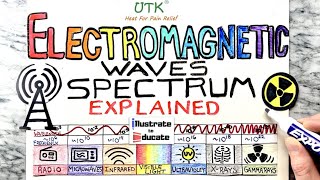
The electromagnetic spectrum represents all possible electromagnetic waves, which are oscillating electric and magnetic fields traveling at the speed of light. Each wave type is defined by its wavelength (or frequency), and the spectrum is traditionally divided into several regions:
- Radio waves – longest wavelengths, used for broadcasting and communications.
- Microwaves – shorter than radio, employed in cooking and radar.
- Infrared – heat‑related waves, felt as warmth from the sun.
- Visible light – the narrow band humans can see, ranging from violet to red.
- Ultraviolet – higher energy than visible, responsible for sunburn.
- X‑rays – used in medical imaging.
- Gamma rays – the most energetic, emitted by nuclear reactions.
Understanding how these regions relate to one another is central to many science curricula. A worksheet that encourages students to order, classify, and calculate these waves provides a solid foundation for deeper exploration.
Why Was the Study of Light a Mystery Until the 19th Century?
Up until a couple of centuries ago, we had no idea what light was. It seemed almost magical, a mysterious phenomenon that could travel through empty space and yet be absorbed by objects. The breakthrough came when scientists discovered that light is an electromagnetic wave, unifying visible light with radio, X‑ray, and other invisible forms. This revelation eliminated the “magic” and opened the door to modern physics and technology.
Key Concepts for the Worksheet
- Frequency and Wavelength Relationship – Use the equation c = λ × f, where c is the speed of light (~3.00 × 10⁸ m/s).
- Energy of a Photon – Calculated by E = h × f, with Planck’s constant h = 6.626 × 10‑34 J·s.
- Classification by Energy – Students should be able to rank wave types from lowest to highest energy.
- Real‑World Applications – Identify everyday devices that use each part of the spectrum.
Worksheet Design Tips
- Interactive Tables – Provide columns for wavelength, frequency, energy, and common uses. Students can fill in missing values using conversion formulas.
- Matching Exercises – Pair wave types with their typical applications (e.g., “Microwave ovens” with “Microwaves”).