Exponents Anchor Chart: A Quick Reference for Students
Exponents can seem tricky at first, but with a clear anchor chart they become a powerful tool for simplifying expressions, solving equations, and understanding algebraic patterns. This article explains how to create an effective exponents anchor chart, highlights common rules, and shows practical examples that teachers and students can use in the classroom or at home.
Why Use an Anchor Chart for Exponents?
Anchor charts are visual aids that summarize key concepts and provide instant reference points. For exponents, they help students:
- Remember the rules for multiplying, dividing, and raising powers.
- Recognize special cases such as zero, one, and negative exponents.
- Apply the laws of indices to simplify complex expressions.
By placing an anchor chart on the wall or in a shared digital space, learners can quickly check their work without searching through textbooks.
Key Exponent Rules to Include
Below is a concise list of the most frequently used exponent rules. Each rule is accompanied by a brief explanation and an example to illustrate its use.
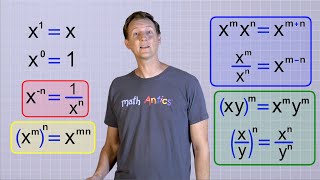
- Product of Powers Rule – When multiplying powers with the same base, add the exponents: am × an = am+n Example: 32 × 34 = 36 = 729
- Quotient of Powers Rule – When dividing powers with the same base, subtract the exponents: am ÷ an = am-n Example: 57 ÷ 53 = 54 = 625
- Powers of a Power Rule – Multiply the exponents: (am)n = am×n Example: (23)2 = 26 = 64
- Zero Exponent Rule – Any nonzero number raised to the zero power equals one: a0 = 1 Example: 70 = 1