Label the Compass Rose: A Complete Guide
Whether you’re a geography teacher, a history buff, or simply curious about navigation, understanding how to label a compass rose is a foundational skill. A compass rose, the symbolic representation of the cardinal and intercardinal directions on a map, helps readers orient themselves and navigate the world. This article walks you through the basics, the history, and practical tips for labeling a compass rose in both traditional and digital formats.
What Is a Compass Rose?
A compass rose is a graphic element that appears on maps to indicate direction. Traditionally, it displays the four cardinal points—North, South, East, and West—along with the intermediate points that form the compass system. By labeling these points, cartographers and map readers can quickly determine orientation and distance.
The Cardinal and Intercardinal Directions
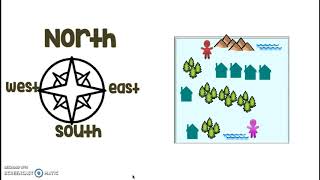
At its core, a compass rose contains four cardinal directions:
- North (N) – The topmost point.
- South (S) – The bottommost point.
- East (E) – The rightmost point on a standard map.
- West (W) – The leftmost point on a standard map.
Between each pair of cardinal points lie the intercardinal (or ordinal) directions:
- Northeast (NE) – Between North and East.
- Northwest (NW) – Between North and West.
- Southeast (SE) – Between South and East.
- Southwest (SW) – Between South and West.
These eight directions form the basic compass system that most people use daily.