Operation Words In Math: A Clear Guide for Students and Teachers
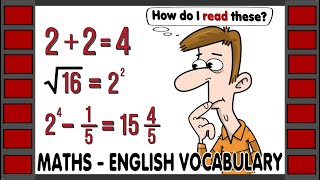
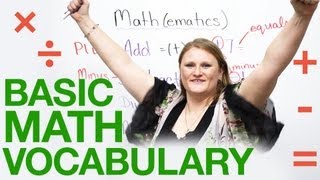
Operation words—also known as math vocabulary—are the terms that describe how numbers interact in a problem. Mastering these words helps students read, solve, and explain equations confidently. In this article we’ll explore the most common operation words, provide clues for identifying them in text, and share practical ways to reinforce vocabulary in the classroom.
Why Operation Words Matter
When a math problem says “add,” “subtract,” “multiply,” or “divide,” it is using an operation word to signal the action needed. These words are the building blocks of algebraic thinking and are essential for:
- Understanding problem statements
- Choosing the correct calculation method
- Communicating solutions clearly
- Connecting word problems to real‑world scenarios
Teachers often find that students struggle not with the numbers themselves but with the language that frames the problem. That’s why a focused vocabulary lesson can make a big difference in overall math performance.
Common Operation Words and Their Clues
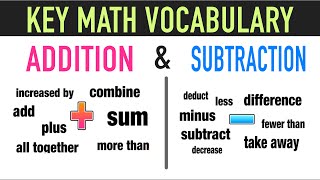
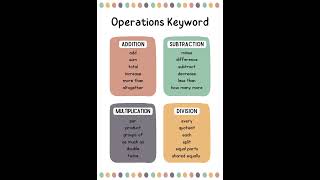
- Add – Look for words like “total,” “sum,” “combined,” or “plus.” Example: “What is the sum of 7 and 5?”
- Subtract – Keywords include “difference,” “take away,” “minus,” or “remainder.” Example: “If you take away 3 from 10, what remains?”
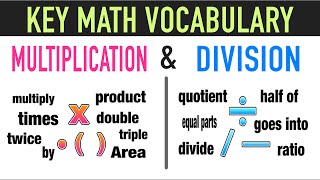
- Multiply – Watch for “product,” “times,” “each,” or “in groups of.” Example: “How many apples are in 4 groups of 6?”
- Divide – Look for “quotient,” “share,” “per,” or “split into.” Example: “Divide 12 by 4 to find how many each person gets.”
- Equal – The symbol “=” or words like “equals,” “is the same as.” Example: “7 plus 5 equals 12.”
- Greater Than / Less Than – Use “more than,” “greater,” “higher,” “smaller than,” or “lower.” Example: “Is 9 greater than 4?”
By identifying