Printable Material Chart: A Practical Guide for 3D Printing Filaments
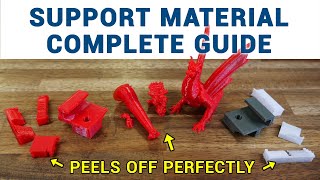
When you first start 3D printing, the sheer number of filament options can feel overwhelming. A printable material chart is a quick reference that helps you match the right filament to your project’s requirements—strength, flexibility, finish, or cost. Below, we break down the most common filament types, highlight unusual pairings that save time, and share tips to reduce support material and keep your prints efficient and affordable.
Why a Printable Material Chart Matters
Having a single, easy‑to‑read chart lets you:
- Compare key properties such as tensile strength, temperature tolerance, and surface finish.
- Make informed material choices for functional parts, prototypes, or aesthetic models.
- Optimize print settings by knowing the ideal bed temperature, extrusion speed, and cooling requirements.
- Reduce waste by selecting filaments that minimize support usage and over‑extrusion.
Core Filament Types and Their Ideal Uses
1. PLA (Polylactic Acid)PLA is the most beginner‑friendly filament. It’s biodegradable, emits a pleasant scent, and prints at lower temperatures (190–220 °C). Ideal for:
- Prototypes and visual models.
- Household items that don’t face extreme heat.
- Projects where a smooth finish is desired.
Combines the ease of PLA with higher durability. PETG is slightly flexible, has good chemical resistance, and requires temperatures around 240–250 °C.
- Functional parts like gears or housings.
- Water‑resistant items such as phone cases.
- Components needing impact resistance.
Known for its toughness and heat resistance (250–260 °C). ABS is more prone to warping, so a heated bed and enclosure are recommended.
- Mechanical parts that must withstand stress.
- Automotive components or tool housings.
- Items requiring a glossy finish after post‑processing.
Flexible and rubber‑like, TPU prints at 210–230 °C. It’s excellent for:
- Phone grips and protective covers.
- Seals and gaskets.
- Artistic projects that benefit from a bendable surface.
Nylon is strong, abrasion‑res