What Is a Problem‑Solution Game?
A Problem Solution Game is a structured activity that turns a real‑world challenge into an interactive puzzle. Participants must identify the core issue, brainstorm possible answers, and test those answers against clear criteria. The format blends the excitement of a game with the rigor of problem‑solving, making it ideal for classrooms, corporate training, and casual brain‑teaser sessions.
Why Play a Problem‑Solution Game?
These games sharpen critical thinking, improve communication, and boost confidence in decision‑making. By framing a problem as a game, learners feel less pressure and more motivation to experiment. The immediate feedback loop—win or lose based on the chosen solution—helps cement concepts faster than traditional lecture‑based methods.
Key Benefits
- Enhanced analytical skills: Players dissect complex scenarios into manageable parts.
- Collaboration boost: Teams share diverse perspectives, mirroring real‑world project work.
- Retention increase: The fun element creates memorable learning moments.
- Adaptability training: Rapid iteration teaches flexibility when initial solutions fail.
Core Elements of a Successful Game
Designing an effective Problem Solution Game involves four pillars:
- Clear problem statement: Define the challenge in concise language. Avoid vague wording that could confuse participants.
- Solution pathways: Offer multiple plausible routes. This encourages creative thinking and prevents a single “right” answer.
- Evaluation criteria: Set measurable metrics (time, cost, impact) so players can objectively assess outcomes.
- Feedback mechanism: Provide instant results, hints, or debriefs to guide learning.
Popular Formats and Real‑World Examples
Problem Solution Games appear in many settings, from corporate case interviews to casual riddles. Below are three common formats that illustrate the concept.
1. Riddle‑Based Challenges
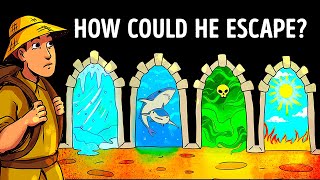
Riddles are a classic, low‑tech way to test wits and survival skills. For example, a set of 12 riddles can be presented as a “survival quest,” where each correct answer unlocks the next clue. Participants write down their solutions, fostering both individual reasoning and group discussion.
2. Retrograde Analysis Puzzles
Retrograde analysis is a style of problem‑solving that works backward from a desired outcome to determine the steps needed to reach it. Chess puzzles often use this technique, but it also applies to business scenarios such as mapping a product launch from market adoption back to initial research.
3. Consulting Case Simulations
Top consulting firms like McKinsey, Bain, and BCG use case interviews that resemble a Problem Solution Game. Candidates receive a brief, analyze data, propose strategies, and defend their recommendations. To help aspiring consultants, we offer a FREE 30‑minute call with a former McKinsey, Bain, or BCG recruiter who can